Caveat Classroom · Professional development
A strong first month
for new paraprofessionals.
Six short modules on the role, confidentiality, prompting and fading, de-escalation basics, IEP accommodations, data and safety. Scenario checks, a final exam and a certificate of completion a special education director can see.
Why a first month course
Districts report few applicants for each paraprofessional opening and a growing need, and new paraprofessionals are often placed with the students who need the most support before they have had much training. Federal special education regulations expect paraprofessionals who assist with special education to be appropriately trained and supervised under state rules. This course gives new staff a common foundation in the first weeks, alongside your district's own training and the direction of the supervising teacher.
What it is not
It is not a certification or license, and it does not claim to meet any state's training hours or credential requirements; your district and state decide how it counts. Behavior content stays within the paraprofessional's role and sends crisis situations to the teacher and the school's trained staff. Legal topics are explained in general terms, not as legal advice.
Six modules
Each module has short lessons with worked examples, scenario checks with instant feedback, a practice set and a module exam.
- Your role and its boundariesWhat a paraprofessional does; Working under the teacher's direction; Professional conduct and boundaries with students
- ConfidentialityWhat FERPA protects, in general terms; Everyday confidentiality; Talking with families: what to say and what to pass on
- Supporting instruction without doing the workThe prompt hierarchy; Fading help and avoiding prompt dependence; Supporting small groups in reading and math
- Behavior support and de-escalation basicsBehavior as communication, and following the plan; De-escalation and calm language; When it becomes a crisis: your role
- Working with the teacher and IEP accommodationsThe IEP in general terms; Carrying out accommodations as written; Communication routines with the teacher
- Data collection, safety and when to get helpTaking data: frequency, duration and percent correct; Safety, health plans and mandated reporting; When to get help, and a plan for your first month
How it works
- Self-paced on any device; progress is saved in the browser, with a download to move it.
- About 13 hours in all with practice and module checks, spread across the first month.
- Every module ends with scenario questions scored by the course.
- Pass the final exam with 70 percent or higher to print a certificate of completion with a verification code.
- Free with Caveat staff access: staff on a school license start it without paying.
Buy now adds the course to your cart; check out with a card. With staff access, the button opens the course.
For special education directors
How a district buys it and what the certificate shows.
District bundles through schools.html
A Caveat school license gives every staff member, paraprofessionals included, this course and the other professional development courses without a per-person charge. For a cohort of new paraprofessionals across several buildings, request a quote on the schools page and say how many people you are onboarding.
The certificate of completion
The certificate shows the person's name, the course, the number of modules and lessons, the final exam score, the date and a verification code computed from those details. To confirm a certificate, send the name, date, score and code as printed to team@caveatacademic.com. Your district decides whether the hours count toward any requirement.
Paraprofessional First Month is general professional learning. It does not replace district policies, crisis training, a student's IEP or 504 plan, or the direction of a supervising teacher, and it is not legal advice. ParaPro® is a trademark of ETS, which does not endorse this course.
The other branches
One brand. Four branches. Every grade, every next step.
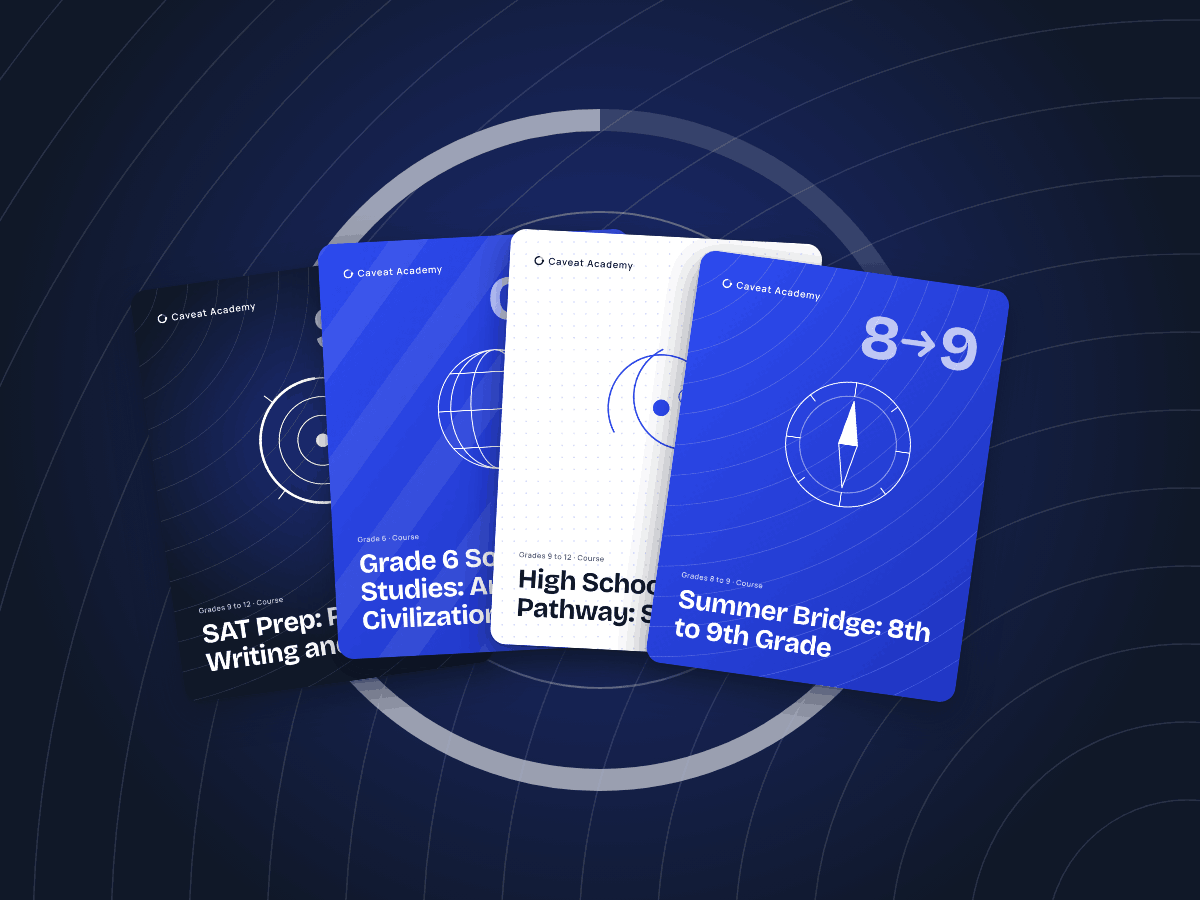 For studentsCaveat Academy
Self-paced courses for grades 6 to 12, from full-year classes to AP and SAT prep.
 For parentsCaveat Co-Op
Homeschool from kindergarten to grade 12, courses for parents, and plans with your Caveat advisor.
 For college-bound students and familiesCaveat College
College credit in high school, the college list, applications, paying for college and the move to college.
The Caveat Family Guide to College is general information, not legal, tax or financial advice. Each college decides admission, aid and how credit counts, and requirements change; check each college's own pages. Examples are examples, not promises. Caveat Academic Services is an independent college preparation company. Students do all of their own work.