Caveat Co-Op · Free · Private, on this device
Evaluation
Timeline Tracker
Type the day the school received your signed consent for an evaluation. See the general federal timeline from there: the evaluation, the eligibility decision, the IEP meeting, the annual review and the three-year reevaluation, with a log of every contact and reminders for your calendar.



1. Your dates
Only dates are needed. Do not type your child's name; a label such as initials is enough if you track more than one child. Everything stays in this browser.
2. Your timeline
3. Contacts and documents
Log every email, call, meeting and document, with the date. Keep notes short and leave out medical details.
4. Reminders for your calendar
Tick the reminders you want, add your own, and download one calendar file (.ics) that Apple Calendar, Google Calendar and Outlook can open. The file is made in this page; nothing is uploaded.
Private by design: the dates, log and reminders are kept only in this browser. Nothing is sent to Caveat or anyone else.
How the federal timeline works
The Individuals with Disabilities Education Act (IDEA) regulations, in plain words. General information, not legal advice.
| Step | What federal rules say | Regulation |
|---|---|---|
| Asking for an evaluation | A parent, or the school, may ask for an initial evaluation. Ask in writing and keep a dated copy. | 34 CFR §300.301(b) |
| The school's answer | The school either asks for your written consent to evaluate or gives you prior written notice that it refuses, with its reasons. Federal rules set no number of days for this answer. | 34 CFR §300.503 |
| Consent | The school needs your informed written consent before an initial evaluation. Consent to evaluate is not consent to services. | 34 CFR §300.300(a) |
| The evaluation timeline | Within 60 days of receiving your consent, or within the timeline your state sets, if it sets one. | 34 CFR §300.301(c)(1) |
| Exceptions | The timeline does not apply if a parent repeatedly fails or refuses to make the child available, or if the child moves to another district after it began (and the new district is making progress and agrees a date with the parent). For a specific learning disability, parents and the team may extend it by written agreement. | 34 CFR §300.301(d) and (e); §300.309(c) |
| What counts as a day | Calendar days, unless a rule says business days or school days. A state timeline may use school days. | 34 CFR §300.11 |
| Eligibility | A group of qualified professionals and the parent decide eligibility. The parent gets the evaluation report and eligibility documentation at no cost. | 34 CFR §300.306 |
| Independent evaluation | If you disagree with the school's evaluation, you may ask for an independent educational evaluation at public expense. | 34 CFR §300.502 |
| The IEP meeting | Within 30 days of a determination that the child needs special education and related services. Services start as soon as possible after the IEP is written. | 34 CFR §300.323(c) |
| Records | You may look at your child's education records; the school responds without unnecessary delay, before any IEP meeting, and within 45 days. | 34 CFR §300.613 |
| Annual review | The IEP is reviewed periodically, and at least once a year. | 34 CFR §300.324(b)(1)(i) |
| Reevaluation | At least once every three years unless the parent and school agree it is not needed; not more than once a year unless both agree. | 34 CFR §300.303(b) |
Many states set their own evaluation timeline, sometimes shorter or longer, and some count school days. Your state education agency's special education pages, your district's procedural safeguards notice and the federally funded Parent Training and Information Center for your state can tell you the rule where you live.
Section 504. A school also evaluates a student before a 504 plan (34 CFR §104.35), but federal 504 rules set no number of days. Ask your school what timeline it follows.
Help with each step
Free and paid tools from Caveat.
The Evaluation Timeline Tracker gives general information about federal special education rules under IDEA (34 CFR Part 300). It is not legal advice and makes no claim about any state's rules. Dates are counted by this page from what you type; your school's and your state's rules decide the actual deadlines. If you think a deadline was missed, your state's Parent Training and Information Center or an attorney can advise you.
The other branches
One brand. Seven branches. Every grade, every next step.
 For teachersCaveat Classroom
Resources made to order, free tools, professional development, certification prep.
 For studentsCaveat Academy
Self-paced courses for grades 6 to 12, from full-year classes to AP and SAT prep.
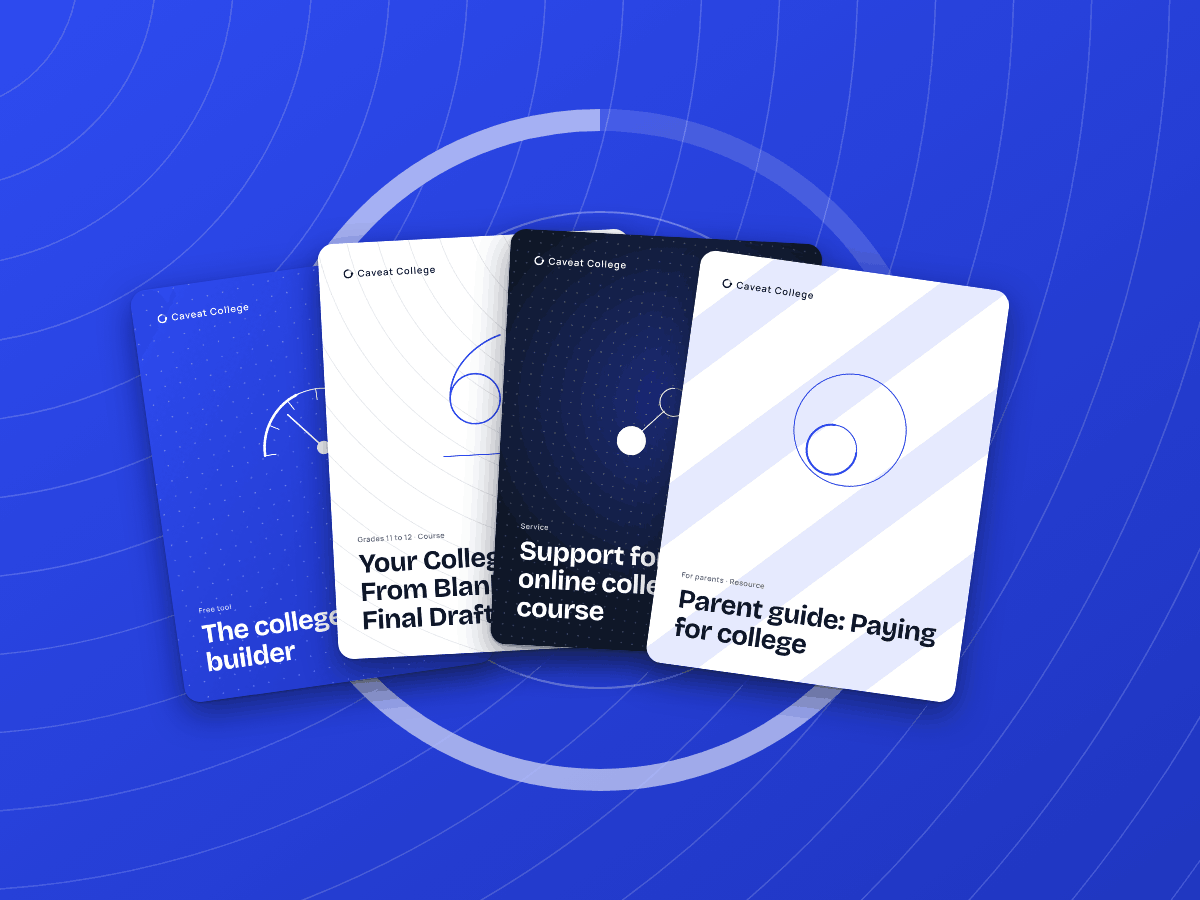 For college-bound students and familiesCaveat College
College credit in high school, the college list, applications, paying for college and the move to college.
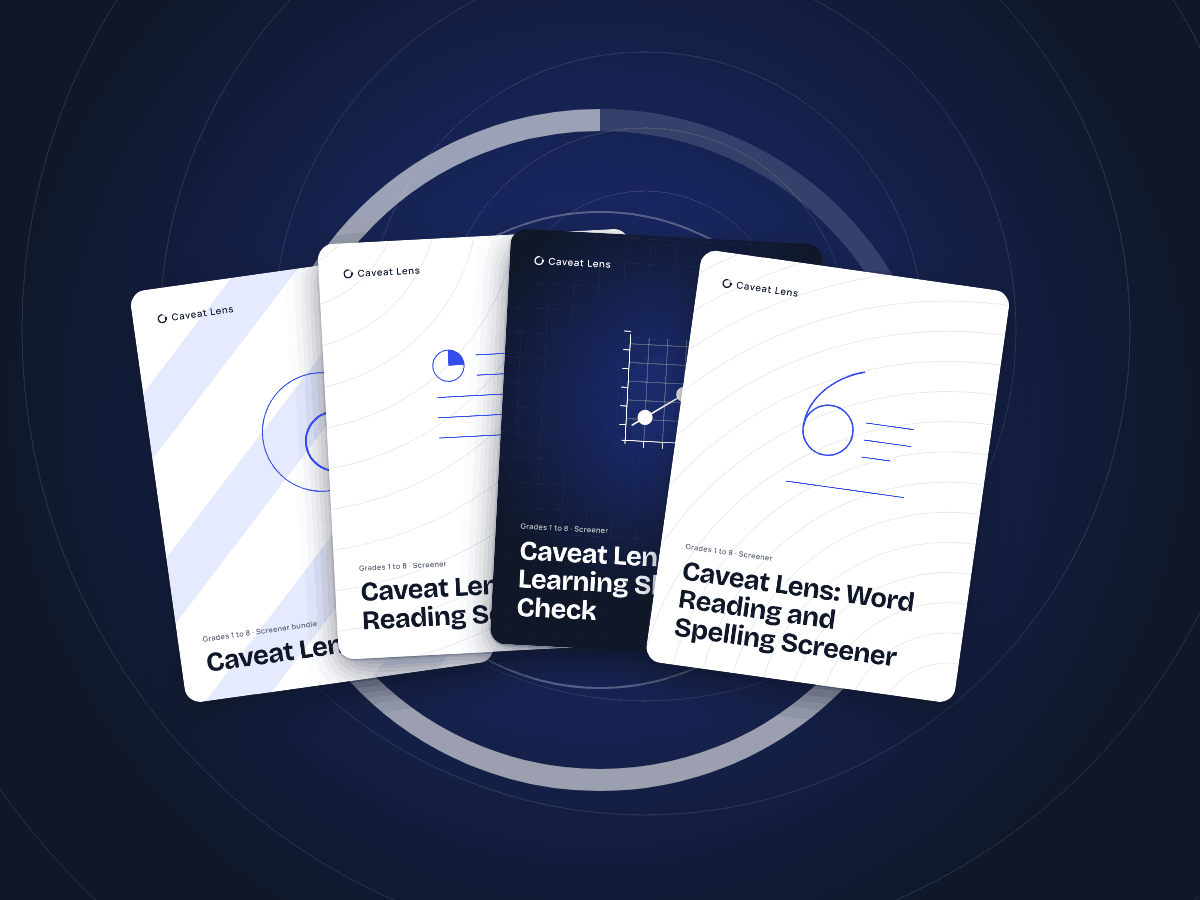 For families with questions about learningCaveat Lens
Screeners for grades 1 to 8 that help you decide whether to ask for a full evaluation.
 For social-emotional learningCaveat Cares
Feelings, friendships and self-regulation, for students, families and teachers.
 For career exploration and readinessCaveat Careers
A free Career Explorer, career pathways and electives, and getting ready for a first job.
Caveat Co-Op tools are general education information, not medical, psychological, legal or financial advice. Each school, district and state applies its own rules. Caveat Academic Services is independent and not affiliated with any school district.